
About Shinzaburo
Hello. My name is Shinzaburo, and I am a former sumo wrestler.
At 16 I dropped out of high school to join a sumo stable, and I stayed in sumo for about seven years until I retired at 23. My highest rank was jonidan, one of the lower divisions on the ranking sheet.
On this blog I write about how grand sumo works, the words you hear around it, and daily life inside a sumo stable. I draw on my own experience from those years and on what I have since checked in books and official sources, and I keep the two apart so you know which is which.
This English edition shares that same experience with readers outside Japan.
My sumo career at a glance
Here is my time as a rikishi, a professional sumo wrestler, in one table.
On a phone, swipe sideways to see the whole table
| Pen name | Shinzaburo |
|---|---|
| Joined | A sumo stable at 16, after leaving high school |
| Retired | At 23 |
| Time in sumo | About seven years |
| Highest rank | Jonidan |
| What I experienced | Communal life in a stable, morning practice (shiko, matawari, butsukari-geiko), chanko cooking duty, maezumo, the shinjo shusse hiro debut ceremony, grand tournaments, a year as tsukebito, attendant to a sekitori (a wrestler in the top two divisions) |
| Now | Working as a care manager while writing about sumo from my own experience and from checked sources |
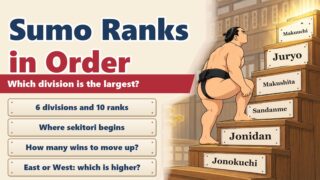
If you want to know where jonidan sits on the banzuke, the official ranking sheet, I explain the whole ladder in my guide to sumo ranks.
Joining a sumo stable at 16
What first drew me to sumo was the Waka-Taka boom of my childhood, when the brothers Wakanohana and Takanohana were everywhere on television. It was not only the tournament broadcasts. Whenever the two of them came up on the news or in a documentary, I was in front of the screen watching.
I carried that admiration straight out of high school. At 16 I quit and knocked on the door of a sumo stable, a heya, where wrestlers live and train together.
Once inside, though, I soon saw that the ring on television was only part of sumo. A stable has morning practice. It has a strict order between senior and junior wrestlers. New recruits also get the cleaning and the odd jobs.
So there are two kinds of sumo I know: the one I admired from in front of the television, and the one I found inside. Having lived both is the ground I write from.
Seven years in a sumo stable
Those seven years held more than morning practice. There was chanko duty, a year as an attendant, and the tournaments themselves. Here are four parts of it.
Morning practice and the basics
In my stable, morning practice began with shiko, the sumo leg stamp. Before sanban-geiko, the repeated practice bouts, we warmed up with around 100 shiko, then suriashi, sliding the feet along the ground, and teppo, striking a wooden pillar with the palms. That took about 30 minutes in all.
Matawari, the sumo splits, was my weak point. My hip joints were stiff from the start. With daily practice they opened up to a degree, but I never managed a clean full split.
In butsukari-geiko, the drill where one wrestler charges and the other receives him, I hated taking the receiving side. I was small and light, and I could not hold my ground at the edge of the ring.
That side of things, the things I could not do well, goes into my articles too. I do not hide it.
Chanko duty and living with the senior wrestlers
In a stable, the wrestlers all live in the same place. Each time a new banzuke came out, it was decided who would serve as attendants and who would be on chanko duty, and I did both.
Chanko is the food wrestlers eat in a stable, and chanko duty means cooking the daily meals. That job is the root of my love of cooking today.
The order between senior and junior wrestlers, on the other hand, was not something the banzuke alone decided. How to carry yourself outside the practice ring, how to deal with a senior wrestler. I was not so much taught these things carefully from the start as I learned them by being scolded and getting them wrong.
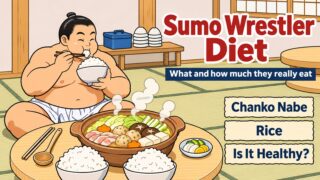
What wrestlers actually eat, and how chanko fits into the day, is in my article on the sumo wrestler diet.
From maezumo to the tournaments
My first time on a tournament ring was in maezumo, the preliminary bouts new wrestlers fight before they get a place on the banzuke. I won three bouts there.
Some of the recruits who joined when I did reached their debut ceremony without three wins. That is why I remember the relief of having my three before the day came.
The ceremony itself is the shinjo shusse hiro, where new wrestlers are presented to the crowd. I went up in a kesho-mawashi, the embroidered ceremonial apron, borrowed from my stablemaster. The senior wrestlers tied it on me, and it was heavy. I can still feel that weight.
From there I kept climbing onto the tournament ring for about seven years. My highest rank was jonidan. In one bout, one win short of promotion to sandanme, the division above, I froze with nerves and lost without doing anything.
A year as a tsukebito
For about a year I also served as a tsukebito, a personal attendant to a sekitori. The day began with waking him up.
I woke him at the time he asked and helped him put on his mawashi, the belt wrestlers wear. At practice I wiped away his sweat and the sand with a towel. During tournaments I helped him into the kesho-mawashi for the ring-entering ceremony and into the belt he fought in. Through the whole day, I do not think I ever relaxed.
When I write about a tsukebito’s work from the inside, that year is what I draw on.
What I understood only after leaving sumo
While I was in sumo, regret outweighed everything else. I retired at 23 without rising the way I had hoped, and life afterward did not run smoothly either.
Outside the stable, money and time felt different
The first thing that threw me was my sense of money and of time.
On a phone, swipe sideways to see the whole table
| In the stable | Out in the world | |
|---|---|---|
| Food and a bed | Provided by the stable. Even with no money in my pocket, I had that day’s meals and a place to sleep | Rent and utilities, all paid by me |
| Working hours | Practice was hard, but after practice there was time with the others in the stable | Clock in at 8 in the morning, then about four hours of overtime on average. Go home, sleep, nothing more |
The right-hand column is my life after retiring, when I worked as a temp on a factory line. After a few months of it, I understood that outside sumo there is hardship too, just of a completely different kind.
There was a time when I thought I should never have become a wrestler at all.
More than twenty years on
Even so, more than twenty years have passed since I retired, and I look back on the stable with fondness more often than I used to.
I am not going to rewrite those seven years as all good experience. There was real hardship, and there are real regrets. But looking back now, I can also see how much those years gave me.
The regret did not disappear. What changed is how I receive that time. That is where I stand today.
Why I started this blog
Search for sumo and you will find plenty of articles on how the banzuke works, on records, on sumo terms. What I found far less of, as far as I looked, were pieces by someone who had actually lived in a stable and wrote about things like these:
- what they were doing at the time
- how it felt
- what happened where the cameras never reached
Before I joined, I was one of those readers who wanted to know anything at all about the sumo world. I spent my small allowance on the monthly magazine Sumo and tried to picture the inside of a stable from television and books.
Some of you reading this now may be wondering the same thing I was then. What is it really like inside?
That is why I write this blog: to put what I actually experienced alongside the general facts about sumo. Whether you found sumo recently or have watched it for years, I hope it brings the sport a little closer, including the parts you cannot see from the ring.
What I keep in mind when I write
I want my experience to be the strength of this blog. At the same time, I try not to write as if being a former wrestler means I know everything. These are the rules I hold to.
- Keep what I experienced separate from what I looked up. When it is my experience, I say so, with words like “in my case,” so you can tell.
- Check records, rankings, the rules and facts about active wrestlers against the Japan Sumo Association’s official site and reference works such as the Sumo Daijiten.
- Never present my own stable’s way of doing things as the rule for all of sumo. What I know first hand is one stable, in one period.
- Explain things in words that make sense to someone who knows nothing about sumo.
- Keep the sensations only a former wrestler can describe as concrete as possible, and keep the failures and the things I could not do well in the story.
What I can write about, and what I cannot
As a wrestler, my own experience runs from jonokuchi, the lowest division, up to jonidan. I never fought in a tournament as a sekitori. So when I write about a sekitori’s life, I separate what I saw and heard myself as a tsukebito from what I learned from other sources.
The same goes for yokozuna and ozeki, the two highest ranks. I will not dress up something I never experienced as a personal story just because I can call myself a former wrestler. That is a line I intend to keep.
Shinzaburo today
Today I work as a care manager and write this blog alongside that job (as of October 2026). After leaving sumo I went into care work, and earning my qualification as a certified care worker was one of the things that let me believe I could do something outside sumo too.
Hobbies and family
- Cooking. Chanko duty left me with a liking for it, and in winter I often make chanko hot pot at home.
- A vegetable garden. I kill off plants now and then, but watching them change little by little is a pleasure.
- Manga, anime, video games and camping.
At home it is just my son and me. When he was small we went to watch sumo together. These days, when we play fighting games, I cannot beat him.
I also post about sumo on X: @shinzabu22
The characters on this blog
I do not write the articles alone. Five characters join me in them, asking questions or adding a comment along the way.

Masaru
Masaru is a former sumo wrestler who was Shinzaburo’s junior. He is 38. The two come from the same hometown, so they have kept spending time together since retiring. He is easygoing by nature, with a habit of missing the point. Every time a friend asks him to make chanko nabe, the hot pot wrestlers eat, he has Shinzaburo teach him the recipe. He is a little slow to remember things. He currently works part-time jobs.
Sakura
Sakura is 24 years old. She works at an IT company in Tokyo. Fitness is her hobby, which is how she became interested in the way sumo wrestlers train and eat. Curious by nature, she has started going to watch sumo too, with her interest growing deeper all the time. Lately she has been thinking about pulling her friends in so they can enjoy sumo together.
AI Raiden
AI Raiden is not a real wrestler. It is an AI that carries on the spirit of Raiden Tameemon, said to be the strongest wrestler of the Edo period, revived in the present day. It knows sumo techniques as well as sumo history, with the added ability to explain how they connect to modern fitness or ways of eating. Day to day it acts like an approachable older brother, while the pride of a wrestler who once ruled the ring stands behind the sumo knowledge and wisdom it passes on.
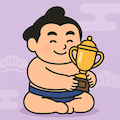
AI Yokozuna
AI Yokozuna is not a real wrestler. It is an AI born from the collected wisdom of modern yokozuna, the wrestlers who reached sumo’s highest rank. It cares about the weight of a bout, courtesy, effort, resolve and the beauty of sumo. It can talk about anything from the banzuke, the three special prizes called sansho and kensho prize money to good manners for spectators. Its voice is quiet, sometimes heated, always giving the reader a push forward.
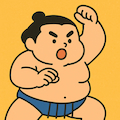
AI Mongolian Yokozuna
AI Mongolian Yokozuna is not a real wrestler. It is an AI born from the words and records of great yokozuna from Mongolia. It hates to lose, valuing strength, resolve, training and mental toughness above all else. It understands well the hardships of wrestlers who come from another country to take on the world of Japanese sumo. When the talk turns to wrestlers from Mongolia or other foreign-born wrestlers, its tone grows more forceful, as one who knows what it is to live by winning and losing.
To my readers
This blog is for sumo fans, of course. It is just as much for anyone who has only recently become interested, who finds the banzuke and the sumo vocabulary confusing, or who wants to know how wrestlers actually live in a stable.
I was never a yokozuna, an ozeki, or even a sekitori. My highest rank was jonidan. But from 16 to 23 I lived in a sumo stable, trained and fought in tournaments as a jonidan wrestler, cooked chanko and served as a tsukebito.
Because of that, I believe I can write about something the records of the top wrestlers do not show: the everyday life of the wrestlers further down the banzuke.
What I experienced, I write as concretely as I can. What I do not know, I do not pretend to know. I will keep adding articles in that spirit.
If the next sumo you watch feels a little closer after reading this blog, that will make me happy.
Questions and comments are welcome through the contact page.